Founded in 1914
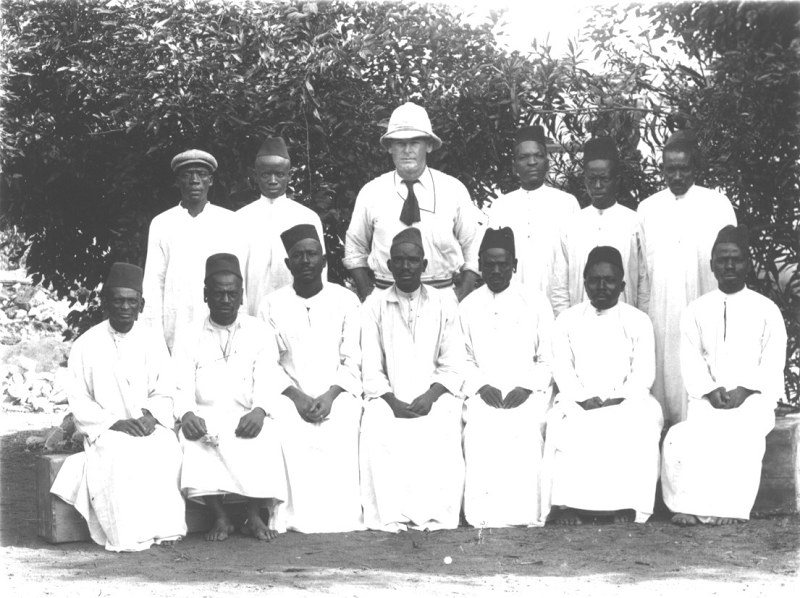
The First Principal of Huron Training College with 12 of the 13 Students in January 1914
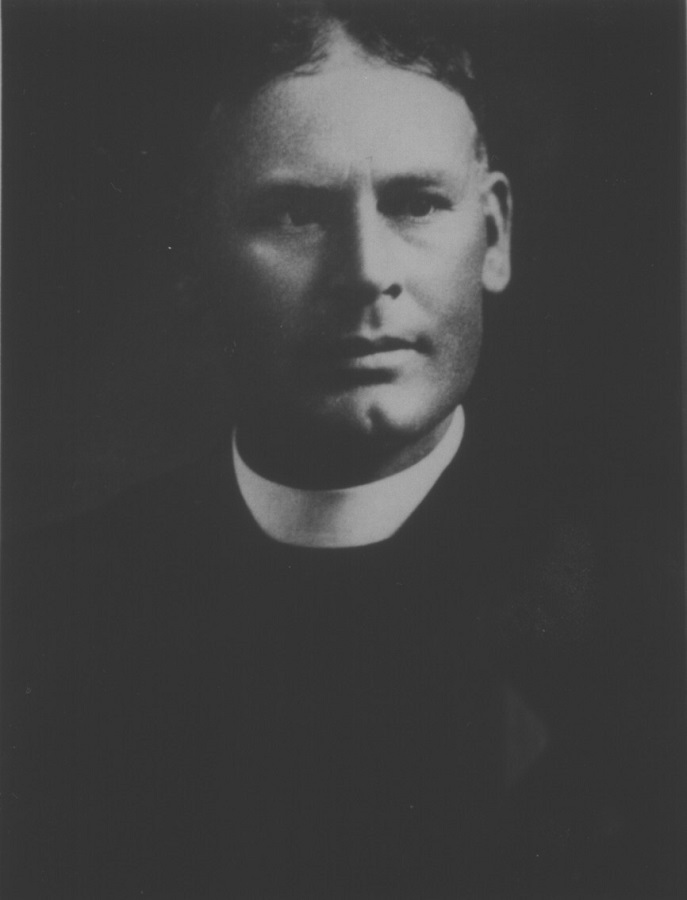
Rev. Thomas B.R Westigate was the Founder of the College, the Builder of Westgate House and the first Principal of The Huron Training College under the CMS Mission.
Our History
St Philip’s Theological College is the product of CMS missionaries who came and planted the Church in East Africa back in 1876 in Mpwapwa area. In 1899 the Church was planted in Kongwa and small congregations were starting up throughout the area as revival spread, but how to bring these young Christians to spiritual maturity posed a problem. Missionaries could only visit the scattered churches once or twice a year. Because of that, missionary started some training to Local church leaders providing them with some initial training which equipped them for the role of evangelists. As the work grow they came to realization the church needs more local lay leaders and African clergy who will have to be trained to minister to the needs of the growing congregations.
After much prayerful discussion the decision was made in 1913 by CMS UK to commission Rev. Dr Thomas Westgate a Missionary from Canada to launch a Theological College at Kongwa. They named the College “HURON TRAINING COLLEGE” after Huron College in Canada where Westgate had studied. Later on the name was changed to “CMS TRAINING COLLEGE” , and in 1951 the name changed to “ST PHILIP’S THEOLOGICAL COLLEGE”.
The building work started in the same year and the College was officially started its ministry in 1914 to train Christian leaders for the Anglican Church and other Protestant Churches. Since then St Philips’ emphasis has been in the training of men and women towards Church leadership and the ordained ministry with additional emphasis in offering special training to the pastor’s wives so that the couples are prepared together.
Due to its reliable reputation, St Philips has for many years been receiving students from other denominations such as the Lutheran and Moravian churches and even from neighboring countries such as Kenya, Rwanda and Congo (DRC); and therefore has managed to train hundreds of men and women for Christian Leadership. Over the years St. Philip’s has seen many changes to staff, buildings and syllabus but the emphasis remains the same: to equip men and women for the task of serving the Christian Church in East Africa. Apart from the diversity in the dioceses represented in both staff and students who come from different denominations. The College has also been a diverse representation of nationalities from abroad.
Please read more about our history in a our kindle book available in the following link:
https://www.amazon.co.uk/History-Kongwa-Centenary-Theological-Tanzania-ebook/dp/B00NCQHC3C
Our Belief

St Philip’s is Theological College as an Evangelical College we believe in:
- One God in three persons. As Trinitarian we believe that our God exists as three persons who is one being having a single divine nature (Trinitarian in Doctrine)
- The divine inspiration and authority of the Bible, and that its teachings must be biblically sound and relevant to the Church it serves (Biblical centred). As Biblical centred we are very much committed to Bible reading and prayer, which is reflected through our ephasis on Bible study and daily public and personal devotion.
- The centrality of the Cross of Christ to the Christian life and thought (Christ centered). As Christ centred we very much insiist on the importance of individual conversion to Christ. ·
Our belief in these three values are potrayed in our logo where there are three things expressing our belief: the Triangale standing for Trinitarinian belief, A book standing for our Biblical centred belief’ and a cross standing for our Christ centred faith.
Our Goal
St Philip’s is committed to training and equipping men and women for pastoral ministry and church leadership with advanced knowledge and understanding in Theology, Mission and Development Studies, Practical skills are learned to enable students to work more effectively in their local environment in a more holistic and practical way building God’s Kingdom.